
The Storm Is Not the Problem: Why Your Focus Determines the Outcome
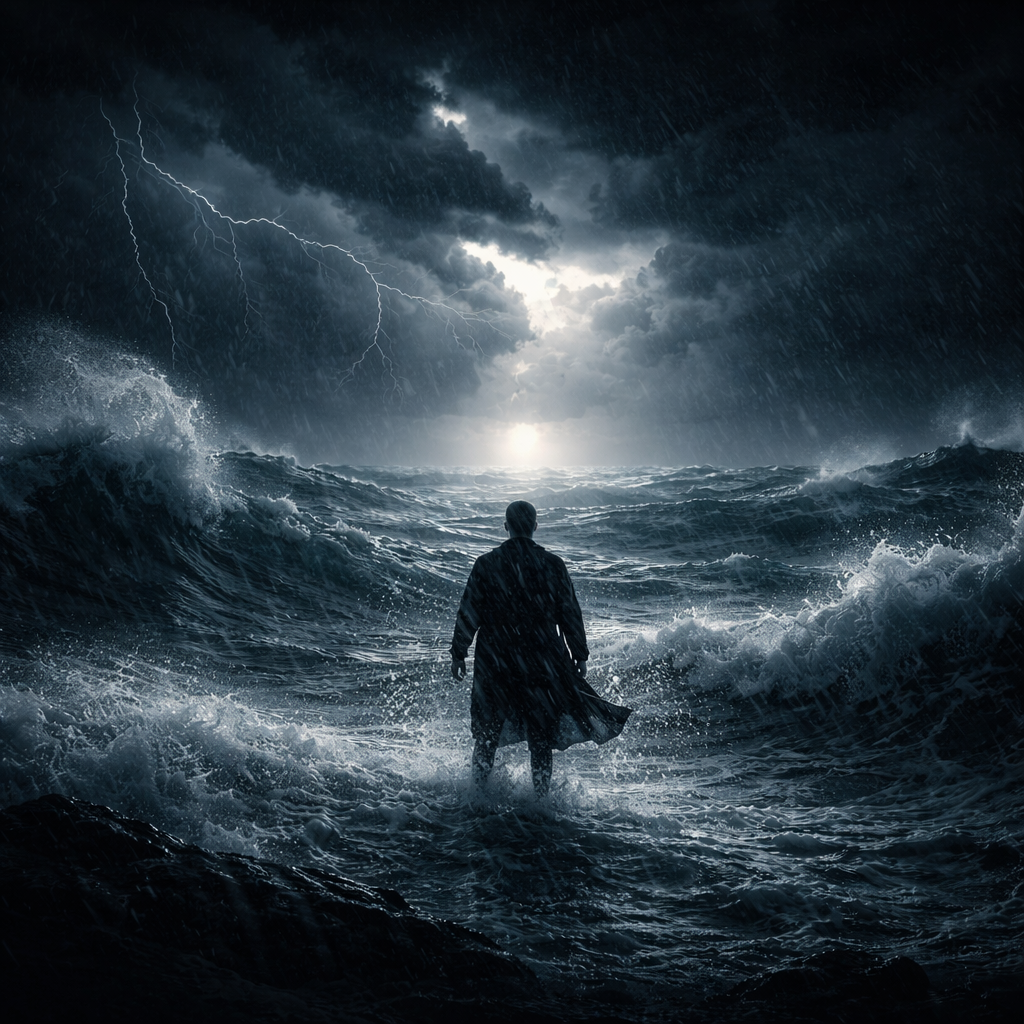
Storms will come, but the storm is not the problem.
Jesus made this clear when He said:
“In the world ye shall have tribulation: but be of good cheer; I have overcome the world.” (John 16:33)
This means difficulty is not an exception. It is part of the experience of living, even for those who follow Him. Scripture reinforces this idea:
“Many are the afflictions of the righteous: but the Lord delivereth him out of them all.” (Psalm 34:19)
So the presence of problems, pressure, or uncertainty is not unusual, and it is not necessarily a sign that something is wrong.
However, there is a mistake we often make when we face difficult situations. We assume that the situation itself is the main issue. But a closer look at Scripture suggests something different.
The storm is not the problem. The response to the storm is.
What Peter’s Experience Shows
The account of Peter walking on water illustrates this clearly.
“And when Peter was come down out of the ship, he walked on the water, to go to Jesus. But when he saw the wind boisterous, he was afraid; and beginning to sink…” (Matthew 14:29–30)
The conditions did not change while Peter was walking. The wind and waves were already present before he stepped out of the boat. Despite that, he was able to walk on water.
This shows that the storm itself did not prevent him from doing what seemed impossible.
The turning point came when his attention shifted:
“But when he saw the wind…”
At that moment, fear entered, and he began to sink.
Why the Storm is Not the Problem
The external situation stayed the same, but his internal response changed. That shift made the difference.
The Role of Focus
What we focus on affects how we respond.
When Peter’s attention was on Jesus, he remained stable. When his attention moved to the storm, his stability weakened.
This is not limited to that moment. It is a pattern that shows up repeatedly in life. When attention shifts toward pressure, uncertainty, or fear, those things begin to influence how we think and act.
For this reason, Scripture places strong emphasis on priority and focus:
“But seek ye first the kingdom of God, and his righteousness…” (Matthew 6:33)
The instruction is simple. What comes first matters. When that order is lost, other things begin to take over.
Living Beyond What We See
Another related idea is the difference between living by sight and living by faith.
“For we walk by faith, not by sight.” (2 Corinthians 5:7)
Living by sight means allowing visible circumstances to define what is true. Living by faith means allowing God’s Word to define what is true, even when circumstances suggest otherwise.
This does not mean ignoring reality. It means not treating what is seen as the final authority.
Faith, in this sense, is not vague or emotional. It is grounded in something solid. It is anchored in Christ, who is described as the foundation and substance behind what we hope for.
Why Storms Occur
There is no single reason for adversity. Scripture presents several.
Some situations reveal what is already present internally.
“…to prove thee, to know what was in thine heart…” (Deuteronomy 8:2)
Pressure can bring hidden fears, doubts, or weaknesses to the surface.
Other situations contribute to growth.
“The trying of your faith worketh patience.” (James 1:3)
Certain qualities develop only through difficulty.
When the Issue Is Focus
There are also times when the difficulty is connected to where attention has shifted.
The Israelites experienced this in a very direct way. During a period of complaint and dissatisfaction, their situation deteriorated. Serpents appeared among them, and many were affected.
The instruction given was straightforward:
“…every one that is bitten, when he looketh upon it, shall live.” (Numbers 21:8–9)
The response required was not complex. It was simply to look.
Those who followed that instruction recovered. Those who did not were not helped.
The situation itself was serious, but the outcome depended on response.
The same pattern appears with Peter. His difficulty began when his attention moved away from where it needed to be.
In both cases, the issue was not only the problem itself. It was also the direction of focus.
Presence, Not Absence
Another important point is that the promise given is not the absence of difficulty, but the presence of God within it.
“Yea, though I walk through the valley… thou art with me…” (Psalm 23:4)
The expectation is not that difficult situations will be avoided entirely, but that they will not be faced alone.
The Role of Fear
Returning to Peter’s example, fear played a key role.
“…he was afraid; and beginning to sink…” (Matthew 14:30)
Fear affects perception and response. It can make situations seem more overwhelming than they are.
For this reason, Scripture addresses it directly:
“God hath not given us the spirit of fear…” (2 Timothy 1:7)
A Practical Response
Given all this, the response is not complicated, even if it is not always easy.
“Looking unto Jesus the author and finisher of our faith…” (Hebrews 12:2)
The emphasis is on maintaining focus.
Not occasionally, but consistently.
The Storm is not the Problem
The presence of a storm does not determine the outcome. The response to it does.
Peter walked in the storm. He began to sink when his focus shifted.
The external situation remained the same. What changed was his attention.
In the end, the storm is not the problem. The real issue is where your focus is when the storm comes.
This leads to a straightforward question:
Where is your focus when things become unstable?
If this has brought clarity, kindly share it with someone who may need it. God bless you!